

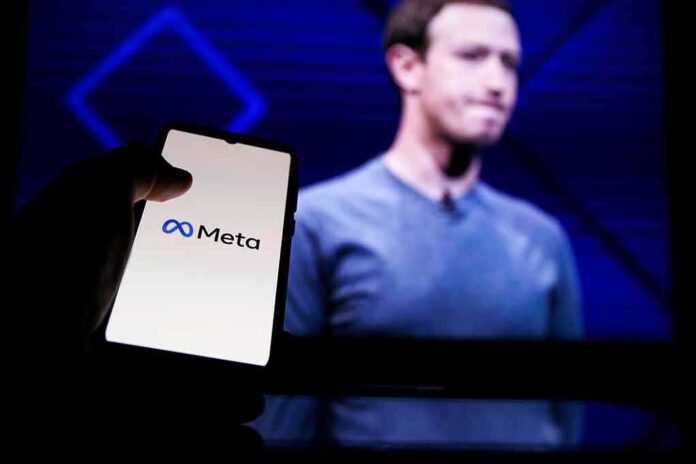
Mark Zuckerberg’s metaverse gamble has quietly burned through tens of billions of dollars, exposing how unchecked Big Tech fantasies can destroy shareholder value while Silicon Valley elites still preach to Americans about “equity” and “democracy.”
Story Snapshot
- Meta’s rebrand and metaverse obsession has reportedly cost the company roughly $77 billion in value with little to show for it.
- Mark Zuckerberg chased a virtual utopia while everyday Americans battled inflation, crime, and border chaos under leftist policies.
- The metaverse stands as a warning about tech oligarchs steering culture, speech, and capital without accountability.
- Trump’s new administration is refocusing on real-world jobs, infrastructure, and energy instead of Big Tech vanity projects.
How Meta’s Metaverse Dream Turned Into a Costly Desert
When Facebook rebranded as Meta in 2021, Mark Zuckerberg declared the “metaverse” the next chapter of the internet, promising immersive digital life, virtual offices, and entire economies built on headsets and avatars. A few short years later, that grand vision looks more like a ghost town. Reports now peg Meta’s metaverse bet at roughly seventy-seven billion dollars in lost value, with users largely uninterested in strapping on goggles to live inside a cartoonish digital world.
Meta’s metaverse platforms struggled to attract and retain normal users who found the experience clunky, isolating, and disconnected from real life. Despite splashy demos and nonstop promotion, engagement remained weak, developers drifted away, and businesses hesitated to spend marketing dollars on spaces almost nobody visited. Hardware sales for headsets slumped, even after price cuts, suggesting consumers were unwilling to trade their real communities for pixelated office meetings and virtual real estate schemes.
Big Tech Elites Chased Fantasy While Americans Faced Reality
While Zuckerberg poured tens of billions into virtual worlds, millions of Americans coped with soaring prices, weak real wages, and rampant cultural chaos fueled by woke corporate agendas. Under the previous Biden administration, Washington prioritized climate symbolism, DEI bureaucracy, and open-border rhetoric while families watched grocery bills spike and crime spread into once-safe suburbs. Against that backdrop, a Silicon Valley billionaire obsessing over cartoon avatars felt wildly out of touch with everyday concerns.
The metaverse push also coincided with Big Tech’s expanding control over speech and information. Platforms already used algorithms and moderation rules to throttle conservative voices, shadow-ban dissenting experts, and steer political narratives. Many on the right saw the metaverse as the next phase of that power grab: a fully controlled environment where tech companies could shape not just what users read, but how they interact, work, and even shop. The collapse of the project’s momentum has slowed that vision, at least for now.
A Stark Contrast With Trump’s Real-World Priorities
Trump’s return to the White House in 2025 has drawn a sharp contrast with the metaverse era’s detachment from reality. Instead of chasing speculative digital empires, the administration is refocusing federal policy on tangible gains: energy production, border security, deregulation, and American industry. Earlier Trump policies already delivered record-low unemployment, rising middle-class incomes, and a surge in manufacturing jobs by cutting red tape and lowering taxes. That track record stands in stark opposition to Silicon Valley’s costly virtual experiments.
Current efforts again emphasize real infrastructure, strong supply chains, and U.S.-based innovation that actually produces jobs rather than hype. By pushing back on globalist frameworks and reasserting American sovereignty in trade, immigration, and energy, the Trump administration is steering investment toward physical plants, pipelines, and ports instead of speculative digital land grabs. For conservative voters tired of being lectured by tech billionaires, this is a welcome pivot from virtual promises to measurable results.
What Meta’s Failure Reveals About Elites and Accountability
The seventy-seven-billion-dollar metaverse loss highlights how insulated corporate elites have become from the consequences of their own decisions. Ordinary shareholders, pension funds, and retirement accounts absorbed the hit while Zuckerberg kept his control structure and influence intact. The episode underscores why conservatives argue for stronger market discipline, less cozy alignment between Big Tech and government regulators, and more transparency when corporations gamble vast sums on ideological or vanity-driven projects.
For many on the right, the metaverse fiasco is not just a bad business story; it is a cultural parable. While families worry about free speech, faith, firearms, and their children’s education, the same elites who censored them online were busy building a digital escape hatch from reality. As Trump’s administration prioritizes secure borders, reliable energy, and constitutional freedoms, Meta’s empty virtual cities serve as a reminder of what happens when those in charge forget who actually keeps this country running.
Sources: