

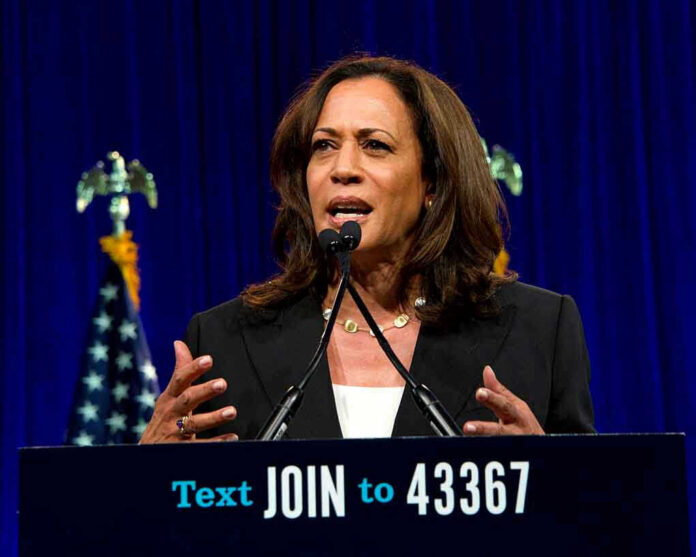
Kamala Harris’s coy “I might run” teases for 2028 expose Democratic desperation, mocking the same leadership failures that rejected her in 2024.
Story Highlights
- Harris ambiguously hints at 2028 presidential bid during recent public appearances, saying “I might” without commitment.
- Comments made at National Action Network convention with Rev. Al Sharpton and in interview with author Sharon McMahon fuel speculation.
- Follows her decisive 2024 election loss, reviving mockery of her indecisiveness amid Trump’s successful second term.
- Media hypes remarks as “bombshell,” amplifying online ridicule and global chatter on U.S. politics.
Harris Teases 2028 Amid Past Defeat
Former Vice President Kamala Harris responded to direct questions about a 2028 presidential run with non-committal phrases during April 2026 events. At the National Action Network convention, Rev. Al Sharpton asked if she would run again. Harris replied, “Listen, I might. I might. I’m thinking about it,” tying her consideration to serving the American people. This echoes her earlier live video call with author Sharon McMahon, where she said, “I haven’t decided… I might.” These remarks follow her unsuccessful 2024 campaign against President Trump.
Political Career Fuels Speculation
Harris built her career as California Attorney General, U.S. Senator, and Vice President from 2021 to 2025 under Joe Biden. Her 2024 presidential bid ended in defeat, prompting initial retreat from politics. Recent public engagements revived 2028 talk in a landscape dominated by Trump’s second term and Republican control of Congress. Harris frames her potential run around public service: “who and where and how can the best job be done for the American people.” Past viral awkward moments have long drawn criticism, but these clips center on explicit teases.
Media Amplifies Mockery and Buzz
Harris’s statements ignited viral spread on YouTube and Dailymotion, with sensational titles labeling them a “bombshell.” Coverage highlights online mockery for her teasing without substance, especially post-2024 failure. Rev. Al Sharpton’s platform and McMahon’s “lightning round” interview provided visibility. Media outlets drive engagement through hype, creating speculation loops. No formal announcement has come; Harris notes her experience: “I know what the job is.” Critics view this as indecisive hedging.
Implications for Democrats and Voters
Short-term, Harris’s words fuel Democratic primary buzz and media cycles, energizing supporters while critics mock her. Long-term, a commitment could reshape the 2028 field against entrenched Republican majorities, or fade into irrelevance. Affected parties include rivals like Gavin Newsom and party donors gauging viability. Politically, it revives internal debates; socially, it deepens polarization online. Both conservatives and liberals share frustration with elite politicians prioritizing power over solving economic hardships blocking the American Dream.
This reflects broader distrust in a federal government seen as corrupt and out of touch, departing from founding principles of limited power and individual initiative. With Trump advancing America First policies, Harris’s signals underscore Democratic struggles to offer real alternatives amid high energy costs, inflation scars, and immigration concerns from past mismanagement.