
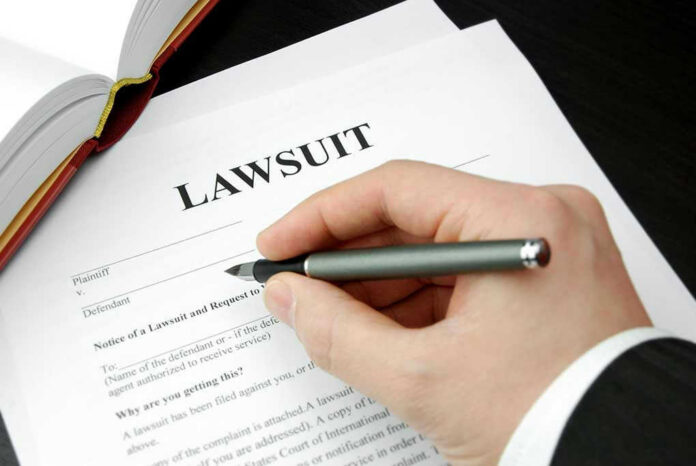
Minnesota families are watching a lawsuit that asks a simple constitutional question: why would a state fund security for some students but deny it to kids in religious and other nonpublic schools?
Quick Take
- Judicial Watch filed suit against Gov. Tim Walz over Minnesota’s refusal to extend certain school security funding to nonpublic schools.
- The dispute centers on the state’s Building and Cyber Security Grant Program and other safety initiatives that, as described, are limited to public districts and charters.
- Catholic leaders and private-school advocates say they warned the governor in 2022 and 2023 that faith-based schools faced rising threats.
- Walz’s office disputes the “no help” narrative, saying nonpublic schools receive some funding and trainings, setting up a factual fight about what aid is actually available.
Lawsuit Targets Minnesota’s Public-Only Security Programs
Judicial Watch’s new federal lawsuit in the U.S. District Court for the District of Minnesota challenges Minnesota’s approach to school safety funding, arguing that nonpublic schools are excluded from key programs despite serving roughly 72,000 students. The complaint focuses on the state’s Building and Cyber Security Grant Program—described as a $50 million initiative—and the broader Safe Schools Program structure that allegedly leaves private and religious campuses on the outside looking in.
Judicial Watch – Judicial Watch Sues Gov. Tim Walz over Refusal to Provide Security for Nonpublic Schools – https://t.co/l08aVDGFFp
— Deen Coldwell III (@deen_iii) March 11, 2026
The case arrives as lawmakers consider additional school-safety measures, including a proposal described as the SHIELD bill, which advocates say would also exclude nonpublic schools from new security funding. With no reported court ruling yet, the immediate question is not who “wins” politically, but whether Minnesota can justify drawing a hard line between public and nonpublic students when the threat environment—violent attacks, threats to faith communities, and copycat risk—doesn’t respect school type.
Warnings After Nashville, Plus a Later Local Tragedy
The lawsuit’s factual backbone leans heavily on earlier requests from Catholic and private-school leaders. On April 14, 2023, Minnesota Catholic Conference Executive Director Jason Adkins and MINNDEPENDENT President Tim Benz sent a letter urging Governor Walz to support $50 million in security funding that would include nonpublic schools. The letter cited the Nashville Covenant School shooting and pointed to threats facing Jewish and Muslim schools as well.
Those appeals were not new. In June 2022, St. Paul-Minneapolis Archbishop Bernard Hebda publicly called for a special legislative session to fund security for all schools, including nonpublic institutions. Advocates say those requests went unanswered—and they argue subsequent events proved the risk was real. The reporting summarized in the provided research references a later Minneapolis Catholic school mass shooting that killed two and injured 17, though the timeline detail is imprecise and not fully documented in the research packet.
What Walz’s Office Says—and What Remains Unclear
Walz’s office contests the idea that nonpublic schools receive nothing. According to the provided reporting summary, the governor’s team says private schools do receive certain state funding and trainings and that the administration is committed to school safety and “gun violence prevention.” That response matters because it reframes the legal dispute from a simple “denial” claim into a more technical argument about which funding streams are open to nonpublic schools, and whether the offered support is comparable.
Based on the research provided, a key point of tension is structural: the Safe Schools Program is described as being tied to tax levies, which inherently limits participation to public systems that levy taxes. Separately, the Building and Cyber Security Grant Program is described as targeting public districts and charters. If that is accurate, the state may argue the lines are statutory and administrative, not religious. Critics respond that constitutional equal-protection concerns can still arise if similarly situated students face unequal protection from known threats.
Equal Protection Stakes for Faith Communities and School Choice
For conservative readers who have watched “equity” language used to justify aggressive social policy in classrooms, this case flips the script: it asks whether basic protection is being distributed unequally, including to Catholic, Jewish, Christian, and Muslim schools. The suit also sits at the intersection of parental rights and school choice. Families who sacrifice to pay tuition often still pay taxes, and they reasonably expect government to treat their children’s physical safety as a nonpartisan priority.
The research packet does not include neutral academic commentary or a developed court record, so it is too early to predict an outcome. Still, the long-term implication is clear: if courts force inclusion, other states with public-only safety grants could face similar challenges. If Minnesota prevails, lawmakers may feel emboldened to keep writing “public only” rules into security funding—leaving families to fund protection through tuition, donations, and volunteer efforts, even amid heightened threats.
Politics, Precedent, and the Pattern of Litigation
Judicial Watch has pursued multiple lawsuits and investigations tied to Governor Walz and other institutions, including matters unrelated to school security. That history is relevant because it shows the group’s litigation strategy: use transparency demands and constitutional arguments to pressure governments that, in their view, apply rules unevenly. Minnesota’s case may become a test of whether school-safety dollars are treated as a public-system benefit—or as a student-safety imperative that follows children regardless of where they learn.
Judicial Watch – Judicial Watch Sues Gov. Tim Walz over Refusal to Provide Security for Nonpublic Schools – https://t.co/l08aVDGFFp
— Deen Coldwell III (@deen_iii) March 11, 2026
For now, the most concrete facts are the existence of the lawsuit, the documented 2022–2023 requests from Catholic leadership, and the disputed question of what aid nonpublic schools actually receive. The next hard proof point will come from filings, program rules, and any discovery that clarifies whether nonpublic schools were categorically excluded or merely steered into smaller, different channels. Until then, families are left with an unsettling reality: threats are real, but the state’s protection may depend on the school’s label.
Sources:
https://www.mncatholic.org/foxnews082825
https://www.ag.state.mn.us/Office/Communications/2026/docs/00190_DHS_Complaint.pdf
https://www.judicialwatch.org/doj-admit-usadf-probe/
https://www.judicialwatch.org/judicial-watch-sues-govt-for-walz-china-files/