

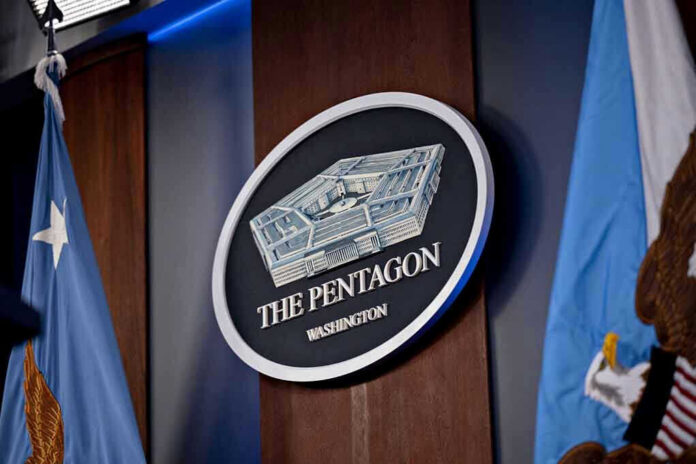
The Pentagon is rewriting a centuries-old military custom by telling chaplains to stop showing rank on their uniforms—an order that raises big questions about authority, religious freedom, and what “reform” looks like in a wartime force.
Quick Take
- Pete Hegseth announced two Chaplain Corps changes: cutting faith-affiliation codes to 31 and replacing chaplains’ visible rank insignia with religious insignia while keeping their rank.
- The stated goal is to make chaplains more approachable for service members seeking confidential guidance on faith, addiction, and relationships.
- Multiple outlets report the uniform move is unusual, with no clear Pentagon precedent cited for removing visible rank from chaplains.
- Some reporting notes key data points cited for the reform—like the scale of faith-code “bloat”—were not independently verified.
What Hegseth Ordered—and What He Did Not
Secretary of War/Defense Secretary Pete Hegseth announced the changes on March 24, 2026, saying chaplains will replace rank insignia on uniforms with religious insignia. The key detail is that chaplains remain commissioned officers with their rank intact; the change is about what is displayed, not about stripping pay grade or authority. Hegseth also said he would sign a memorandum to formalize the guidance.
The second part of the announcement targets a bureaucratic issue: the religious affiliation coding system. Hegseth said the Pentagon will reduce codes from more than 200 down to 31, framing it as a practical reset that better matches how most religious service members identify. Reporting also relays the claim that a large majority of religious troops relied on only a handful of codes, though at least one outlet said it could not verify all those numbers.
Why the Pentagon Says Visibility of Rank Was a Barrier
Hegseth’s stated rationale centers on access and trust. He argued that a chaplain is “first and foremost a chaplain,” emphasizing a sacred calling and the role of chaplains as moral anchors rather than another rung in the command structure. The policy’s practical theory is simple: junior troops may hesitate to approach a senior officer about personal struggles; removing visible rank could lower that psychological barrier while preserving formal rank for official duties.
That framing matters because it draws a sharp line between the chaplain’s ministry and the military’s chain of command. The Pentagon appears to be betting that the uniform signal will encourage more service members to use chaplains for confidential counseling—especially in a force under stress. The sources describe this as part of a broader push, beginning with earlier messaging in December 2025, to refocus chaplains on ministry rather than a generic “support” function.
Religious Liberty Wins, Bureaucratic Risks, and What’s Unclear
From a conservative perspective, the strongest argument in the reporting is that the change elevates religious identity rather than burying it under a bureaucratic label. Replacing visible rank with a faith insignia reinforces that chaplains are not political commissars and not “woke” HR officers—they exist to provide spiritual care. For readers concerned about government hostility to faith, the stated intent reads like a cultural course-correction inside a major federal institution.
Still, the details available so far leave unanswered questions that matter in a constitutional republic. The code reduction could streamline support, but it could also create friction for minority faith groups if the 31 categories prove too broad or mismatched; the current reporting does not detail how the 31 were chosen or how exceptions will be handled. And while multiple sources repeat the “200-plus to 31” narrative, at least one outlet noted it could not independently verify the numbers behind the “code bloat” claim.
Implementation in a Wartime Military—and the Politics Around It
Hegseth’s announcement landed in a politically charged moment for the right: voters who backed Trump to end “forever wars” are now watching Washington manage another major conflict, and patience for open-ended missions is thin. The chaplain policy is not a war authorization, but it does signal how the Pentagon under Trump’s second term is reshaping military culture from within—prioritizing traditional institutions, faith, and morale tools as stress rises across the force.
Hegseth Just Stripped Rank from Every Military Chaplain and Replaced It with Religious Insignia: The Pentagon Has Never Done This Beforehttps://t.co/oX4A5MCxWw
— Harry J. Kazianis (@GrecianFormula) March 26, 2026
The near-term impact is likely limited to uniform guidance and administrative systems, but the symbolism is significant. The sources emphasize there is no indication chaplains are losing rank or being removed from the officer corps; the visible shift is meant to highlight ministry over hierarchy. With implementation dependent on a formal memorandum and with limited reporting beyond March 25, the public still lacks a full picture of timelines, enforcement, and how commanders will integrate chaplains who no longer “look” like officers at a glance.
Sources:
Hegseth Announces Reforms to Chaplain Corps
Hegseth removes rank insignia from military chaplains
Chaplains will go by religious insignia, not rank, under new Pentagon guidance