

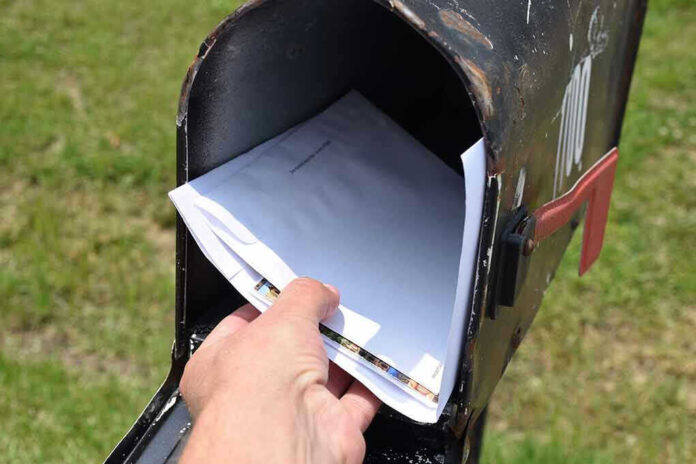
Mail theft-related check fraud is now so rampant in America that a single stolen check can balloon into a six-figure crime spree before the victim even knows it happened.
Story Snapshot
- Check fraud linked to mail theft has surged since the pandemic, with losses soaring past $688 million in just six months.
- Criminals—both lone actors and sophisticated gangs—exploit vulnerabilities in the postal system and check processing.
- Despite growing digital payment options, millions of businesses and individuals still rely on paper checks, fueling the crisis.
- Regulators and banks are scrambling to respond, but prevention starts with practical steps at the mailbox.
Mail Theft-Related Check Fraud: A Crisis Escalating in Plain Sight
Check fraud has always been a background threat, a relic of the analog age. That changed dramatically during the COVID-19 pandemic, when disruptions in daily routines created new opportunities for criminals. Between 2020 and 2021, mail theft complaints jumped by a staggering 161%, a harbinger of the storm to come. By 2021, financial institutions filed over 350,000 Suspicious Activity Reports (SARs) for check fraud, a 23% increase from the previous year. The following year, that number nearly doubled, as $688 million in suspicious activity flooded through the system in just six months. Criminals no longer needed a gun—just a stolen envelope and some chemical know-how.
Organized crime groups began recruiting “money mules” to deposit doctored checks, while individuals exploited everything from unlocked mailboxes to blue USPS collection boxes. The median consumer loss from check fraud now dwarfs typical online scams, hitting ordinary households and small businesses hardest. The United States Postal Inspection Service and the Financial Crimes Enforcement Network (FinCEN) sounded the alarm in early 2023, but the floodgates were already open.
Why Paper Checks Remain Vulnerable—and Why Criminals Love Them
Despite digital payment tools, Americans still write billions of dollars in paper checks every year. Many businesses—especially in business-to-business transactions—stick with checks for tradition, control, or because digital alternatives don’t fit their workflows. Every check in the mail becomes a potential lottery ticket for thieves. Criminals use “check washing,” simple chemicals, and digital editing to transform a $50 check for the electric bill into a $10,000 payday. The attackers’ tactics evolve rapidly, with some gangs running industrial-scale operations and others simply fishing checks out of neighborhood mailboxes.
Regulations designed to protect consumers can backfire. Banks must make check funds available quickly, giving fraudsters a head start before the scam is even detected. Law enforcement and regulators wrestle with the sheer scale of the problem, while banks eat mounting losses and consumers scramble to recover stolen funds. Amidst this chaos, the fundamental vulnerability remains: the physical check itself, moving slowly through a system not built for the digital age’s speed and sophistication.
Fraud Prevention: Practical Steps for Businesses and Consumers
Securing outgoing mail is the single most effective way to prevent check theft. Use USPS collection boxes located in well-lit, high-traffic areas, or bring checks directly to the post office counter. Avoid sending checks from home mailboxes, especially with the flag up, which signals a ready target. Businesses should consider switching to digital payment platforms for payroll and vendor payments whenever possible. For those who must use checks, tamper-evident envelopes and check fraud protection services add layers of security.
Account monitoring is critical. Check your accounts daily, not just once a month. Report any suspicious transactions immediately, as speed is a consumer’s best defense. Educate all employees, especially those handling accounts payable, about common fraud tactics and new threats—fraudsters adapt quickly, but so can vigilant organizations. As regulators and banks push for a transition away from paper, individual vigilance remains the last—and often best—line of defense.
The Road Ahead: Will Digital Payments Overtake Check Fraud?
Industry groups and regulators are accelerating the shift toward digital payments. Federal executive orders and new banking protocols aim to phase out paper checks, but the transition is slow. Surveys reveal that 75% of organizations still mail checks without enhanced security, even as the risks skyrocket. Urban areas report the highest number of incidents, but no community is immune. Insurers and banks are revising risk models, and new technologies promise better fraud detection. Yet as long as paper checks remain in circulation, criminals will find ways to exploit the system.
The long-term solution may be the elimination of paper checks altogether, a view gaining favor among industry experts. Until then, the best defense is a blend of technology, awareness, and old-fashioned caution at the mailbox. The battle between fraudsters and the public is far from over, but armed with knowledge and practical steps, Americans can tip the odds back in their favor.
Sources:
FinCEN reports check fraud amounting to $688 million over six-month period
Check fraud statistics that may surprise you
Companies stick with check payments despite fraud risk
Protecting your money in the age of check fraud
IC3: Public Service Announcement
ABA: Policy Analysis on Mail Theft
Mail Theft-Related Check Fraud Is on the Rise
AFP Survey: Businesses May Be Misled About Risks of Check Fraud