
A silent stand in the House gallery turned into handcuffs—and now Ilhan Omar is demanding answers about who really gets to “protest” inside Congress.
Quick Take
- U.S. Capitol Police arrested Aliya Rahman, Rep. Ilhan Omar’s guest, during President Trump’s State of the Union after she stood up and refused orders to sit.
- Police say the conduct amounted to prohibited “demonstrating” and “disrupting Congress,” a misdemeanor that can carry up to six months in jail or a $500 fine.
- Omar called the arrest “heavy-handed” and demanded a “full explanation,” framing it as a civil liberties issue.
- Rahman’s supporters describe her as a disabled activist standing silently; police emphasize clear rules against demonstrations in congressional buildings.
- The dispute centers on characterization and proportionality, not the basic fact that she refused repeated lawful orders during the address.
What Happened in the Gallery During Trump’s Address
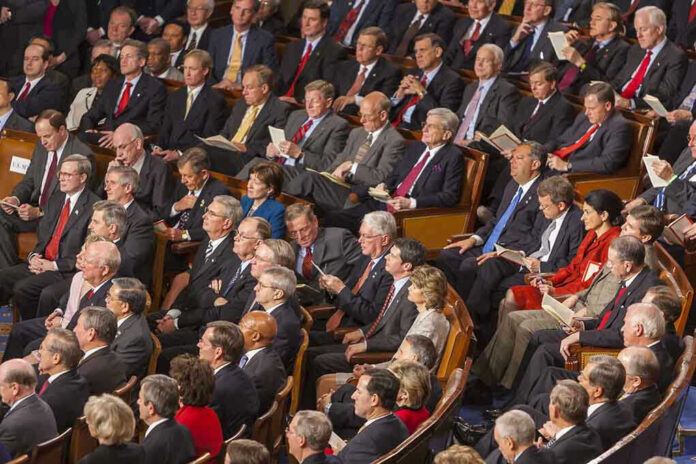
U.S. Capitol Police arrested Aliya Rahman on Feb. 25, 2026, during President Donald Trump’s State of the Union after she stood up in the House gallery and refused to sit when ordered. Police said Rahman “started demonstrating” at about 10:07 p.m. and that State of the Union tickets clearly state demonstrations are prohibited. Rahman was charged with unlawful conduct and disrupting Congress, then transported for medical treatment before booking.
Rahman was released early the next morning, and the incident immediately became political—because she was attending as the guest of Rep. Ilhan Omar (D-Minn.). Omar publicly confirmed Rahman was “back and safe” and defended her decision to bring her, while also continuing her own visible objections during the speech. The core timeline is not in dispute across reporting: Rahman stood, refused instructions, was removed, treated medically, booked, and released.
Omar’s Demand for a Probe Meets Capitol Police’s Rulebook
Rep. Omar responded with a formal statement describing the arrest as “heavy-handed” and calling for “a full explanation of why this arrest occurred.” That framing casts the episode as a warning sign for civil liberties. Capitol Police, however, tied their decision to the long-standing prohibition on demonstrations inside congressional buildings—especially during a high-security event like the State of the Union—arguing they were enforcing rules designed to keep Congress functioning without disruptions.
This is where conservatives will see a familiar pattern: political allies try to rebrand a clear rules violation as a “free speech” controversy after the fact. The strongest documented fact is that officers gave Rahman lawful orders to sit down and she refused. Whether her act should be described as “standing silently” or “demonstrating,” the enforcement rationale rests on the refusal to comply inside a restricted federal venue—where decorum rules and security protocols are not optional suggestions.
Rahman’s Background: Immigration Clash, Disabilities, and Competing Narratives
Rahman is a Bangladeshi-American software engineer from Minneapolis who has said she has autism and a traumatic brain injury. She previously drew national attention in January 2026 when immigration agents removed her from her vehicle during “Operation Metro Surge” in Minneapolis. Rahman said she was headed to a medical appointment and told officers she was disabled; DHS, by contrast, described her as an “agitator” who ignored commands to move her vehicle.
After that January encounter, Rahman said she was taken to an ICE detention center and alleged mistreatment and denial of medical care. She later testified to Congress about injuries and the ongoing physical and emotional impact, describing torn shoulders and cartilage damage. Those claims matter because Rahman has also alleged that during the State of the Union arrest, officers pulled on her shoulders despite her warnings about prior injuries—an allegation not addressed in the Capitol Police summary.
Security, Decorum, and the Real Constitutional Tension
State of the Union night is not a town hall; it is one of the most controlled events in American public life, combining the full federal security footprint with strict chamber rules. Capitol Police argue that allowing any individual to defy orders in the gallery invites copycats and risks escalation. From a limited-government perspective, that creates a legitimate constitutional tension: Americans value speech, but Congress also has authority to set rules to conduct official business without being derailed.
Furious Ilhan Omar Demands Probe After Her Radical SOTU Guest Is Arrested—She Might Look Familiar to You https://t.co/RQxAVGHyrO
— Marlow62 (@Marlow3456) February 26, 2026
What the available reporting does not establish is whether officers used unnecessary force during removal or whether accommodations were offered for Rahman’s stated disabilities. Rahman claims a sergeant intervened to stop officers from pulling on her shoulders; that detail is not confirmed by the police statement cited in coverage. With that gap, the most responsible conclusion is narrow: enforcement of a no-demonstrations rule appears clear, while the proportionality and handling claims remain contested pending additional documentation.
Sources:
https://www.foxnews.com/politics/squad-member-claims-state-union-guest-arrested
https://time.com/7381328/ilhan-omar-trump-state-of-the-union-aliya-rahman-arrest/
https://omar.house.gov/media/press-releases/rep-omar-statement-arrest-aliya-rahman