

A contentious move sees nine Republicans joining Democrats to advance Obamacare subsidies, raising eyebrows across conservative circles.
Story Snapshot
- The House approved a procedural rule for an ACA subsidy extension, with nine Republicans siding with Democrats.
- This procedural maneuver allowed Democrats to bypass GOP leadership and set up a vote on extending ACA subsidies.
- Even if passed in the House, the bill faces a tough path in the Senate and opposition from President Trump.
- The move highlights a division within the GOP as moderates break from the party line.
House Republicans Break Ranks
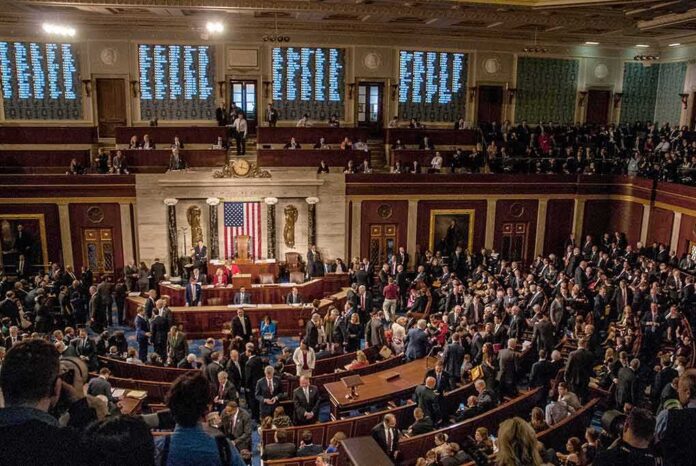
On January 7, 2026, the U.S. House of Representatives approved a procedural rule that set the stage for a vote on a “clean” three-year extension of enhanced Affordable Care Act (ACA) subsidies. This move was notable because nine Republicans joined Democrats, allowing the rule to pass with a 221-205 vote. This defiance against Speaker Mike Johnson’s leadership highlights an internal GOP rift, as these Republicans prioritized their constituents’ needs over party lines.
The procedural rule is tied to a discharge petition, a rare tactic used to circumvent the Speaker’s control over the legislative agenda. By resorting to this mechanism, the Democrats, with the help of the nine Republican defectors, managed to push forward a vote on extending subsidies that expired at the end of 2025. The subsidies impact approximately 22 million of the 24 million ACA marketplace enrollees, many of whom now face significant premium hikes.
Senate Prospects and Presidential Opposition
Despite the House’s upcoming vote on the subsidy extension, the bill’s passage through the Senate remains uncertain. A previous attempt to pass a similar measure failed to garner the necessary 60 votes, despite support from four Republican senators. This legislative hurdle, coupled with President Trump’s vocal opposition to extending these subsidies, suggests that the bill’s journey to becoming law faces formidable barriers.
President Trump has been clear in his stance, advocating for alternative health reforms over extending what he views as costly subsidies. His opposition reflects a broader conservative critique of the ACA as an unsustainable expansion of government involvement in healthcare. Nevertheless, the internal GOP split indicates that for some Republicans, the immediate needs of their constituents take precedence over party orthodoxy.
Implications for GOP Unity and Policy
The decision by nine House Republicans to side with Democrats could have lasting implications for GOP unity and health policy strategy. This move underscores a growing division within the party between ideological conservatives and moderates who are increasingly attuned to their constituents’ needs, especially in competitive districts.
As the debate continues, the broader implications for ACA stability and the GOP’s approach to healthcare reform are significant. If the subsidies are not restored, there could be a destabilizing effect on the insurance market, potentially leading to higher premiums and reduced coverage. This scenario would further complicate GOP efforts to navigate the political landscape surrounding healthcare policy.
Sources:
Axios: House ACA Vote and Senate Prospects
ABC News: House Votes to Advance ACA Subsidies
Politico: House Advances ACA Subsidy Extension