

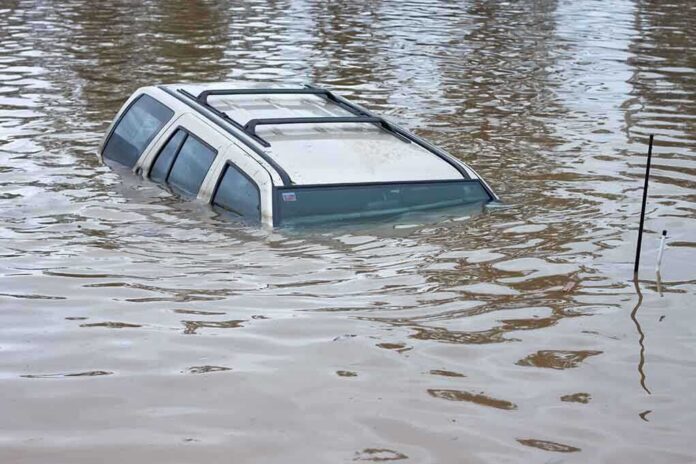
A new wave of extreme weather is threatening lives as Washington State battles catastrophic flooding, raising constitutional concerns about the government’s emergency response.
Story Overview
- Massive evacuations ordered due to historic flooding in western Washington.
- Governor declares a state of emergency, activating National Guard troops.
- Major rivers like the Skagit are expected to crest above record levels.
- Concerns over infrastructure failures and constitutional overreach.
Severe Flooding Threatens Washington State
Western Washington is facing a severe weather crisis as a powerful atmospheric river brings unprecedented rainfall to the region. The National Weather Service (NWS) has warned of catastrophic flooding, particularly along major rivers such as the Skagit and Snohomish. Governor Bob Ferguson has declared a state of emergency, mobilizing around 300 National Guard service members to support evacuation and response efforts. This situation underscores the increasing frequency of extreme weather events and their impact on American lives and infrastructure.
Government Response and Public Concerns
The declaration of a state of emergency by Governor Ferguson has allowed for the rapid deployment of resources to the affected areas. However, the move has also sparked debate about government overreach and the balance between public safety and individual liberties. The activation of the National Guard highlights the severity of the situation, with thousands of residents facing mandatory evacuation orders. This raises questions about the preparedness of local and state governments to handle such disasters without infringing on personal freedoms.
In addition to the immediate threat, the long-term implications of this flooding event are significant. Infrastructure, particularly levees and dikes along the Skagit River, are at risk of failure due to record-breaking water levels. Such failures could lead to widespread property damage and further displacement of residents, prompting calls for improved flood management strategies and infrastructure investment.
Impact on Local Communities and Future Outlook
As many as 100,000 residents could be forced to evacuate, straining local shelters and emergency services. The floodwaters pose immediate risks of drowning and hypothermia, particularly for those who fail to comply with evacuation orders. In the longer term, the region could face significant economic challenges, including damage to agriculture and local businesses, as well as potential changes in land use policies. The situation may also influence political narratives around climate resilience and infrastructure spending.
The forecast suggests that while the current atmospheric river will abate by the week’s end, another storm system is expected shortly thereafter, potentially prolonging the flood crisis. This underscores the need for robust emergency management systems and effective communication strategies to safeguard lives and property in the face of recurring natural disasters.
Sources:
KOMO/KATU: “Major highways closed, evacuations, flash flood watch underway amid state emergency”