

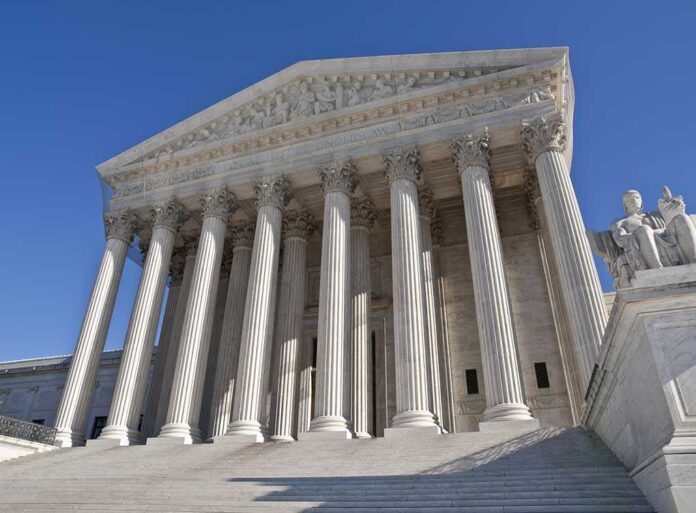
A little-known Supreme Court order quietly handed the Trump Justice Department a setback that could open the door for activist immigration judges to wage policy battles in public.
Story Snapshot
- The Supreme Court’s shadow docket declined to back a Trump-era gag rule on immigration judges
- The case centers on whether the Justice Department can require prior approval before judges speak about immigration policy
- The ruling raises fresh concerns about bureaucrats undermining elected leadership on border security
- Conservatives see a wider fight over free speech, separation of powers, and control of immigration policy
Supreme Court Shadow Docket Delivers Rare Setback
The Trump administration faced an unusual defeat when the Supreme Court’s shadow docket declined to intervene in a challenge to a Justice Department policy restricting immigration judges from speaking publicly without prior approval. The shadow docket is the Court’s emergency decision pipeline, often used to resolve urgent disputes without full briefing or argument. By refusing emergency relief, the justices allowed lower court limits on the policy to stand, at least temporarily, despite the administration’s argument that unified messaging on immigration enforcement is essential.
The Justice Department policy at issue required immigration judges, who are technically Justice Department employees rather than Article III judges, to obtain approval before giving public comments on immigration issues. The administration argued that, as executive branch officials, these judges should not freelance public opinions that conflict with the President’s enforcement priorities. Critics, including some immigration judges and allied advocacy groups, claimed the policy chilled speech and prevented experts from informing the public about what they described as systemic problems in the immigration courts.
Free Speech Claims Versus Executive Chain of Command
Supporters of the challenge framed the dispute as a First Amendment case, insisting government employees retain robust rights to speak as private citizens on matters of public concern. They argued that when immigration judges comment outside their official duties, they should not be muzzled by Washington gatekeepers. The administration countered that when employees leverage their official titles and positions, their public statements can be reasonably regulated to prevent confusion about official policy, particularly on high-stakes issues like border enforcement and asylum processing.
For conservatives, the case highlights a recurring problem: powerful bureaucrats using their credentials to undermine elected leadership while claiming personal free speech protections. When immigration judges publicly criticize enforcement priorities, detention practices, or credibility standards, the public can easily interpret those remarks as authoritative descriptions of law rather than individual opinions. The administration’s policy sought to keep the line clear, ensuring that only vetted, consistent messaging would speak for the federal government on immigration, rather than a patchwork of personal dissent broadcast through media interviews and conferences.
Why Conservatives Worry About Bureaucratic Resistance
The rare loss underscores deeper worries about an entrenched administrative state that resists attempts to restore border security and immigration sanity. Conservatives already watched years of activist litigation, internal leaks, and policy slow-walking aimed at blocking efforts to end catch-and-release, tighten asylum standards, and prioritize deportation of criminal aliens. When courts limit the executive branch’s ability to manage its own employees’ public communications, it can embolden internal critics to wage their fights in the press rather than through proper channels of policy debate and chain-of-command accountability.
Immigration judges hold significant power over who stays in the United States, including illegal entrants claiming asylum or other relief. Public messaging by judges sympathetic to expansive immigration can shape narratives that pressure policymakers and sway opinion against stricter enforcement. By narrowing the Justice Department’s authority to require prior approval, the Court’s move may strengthen those within the bureaucracy who favor looser borders, generous relief, and expansive due-process claims for illegal entrants, all at a time when many Americans demand stronger sovereignty and rule-of-law enforcement at the southern border.
Implications for Future Trump Immigration Policy
The decision arrives in a political climate where the resumed Trump administration is again pushing to close loopholes, secure the border, and stop abuse of the asylum system. Any precedent that makes it harder to manage internal dissent could complicate efforts to align immigration courts with national priorities. If judges and officials can more freely blast enforcement initiatives in public, opponents of border security gain influential voices, complete with federal titles, amplifying narratives that portray firm enforcement as cruel, unconstitutional, or racist, regardless of the actual legal merits.
At the same time, the dispute raises legitimate questions conservatives also care about, including government overreach and free speech. Many on the right worry about agencies punishing whistleblowers or silencing those who expose abuse, waste, or lawless instructions. The challenge is distinguishing between genuine whistleblowing and ideological resistance to lawful policy. Without clearer lines, future litigation could continue chipping away at the executive’s ability to ensure that those entrusted with enforcing immigration law do not publicly sabotage it, even as constitutional protections for genuine private speech are preserved.
Sources:
The Supreme Court’s shadow docket declined to back a Trump-era gag rule on immigration judges